
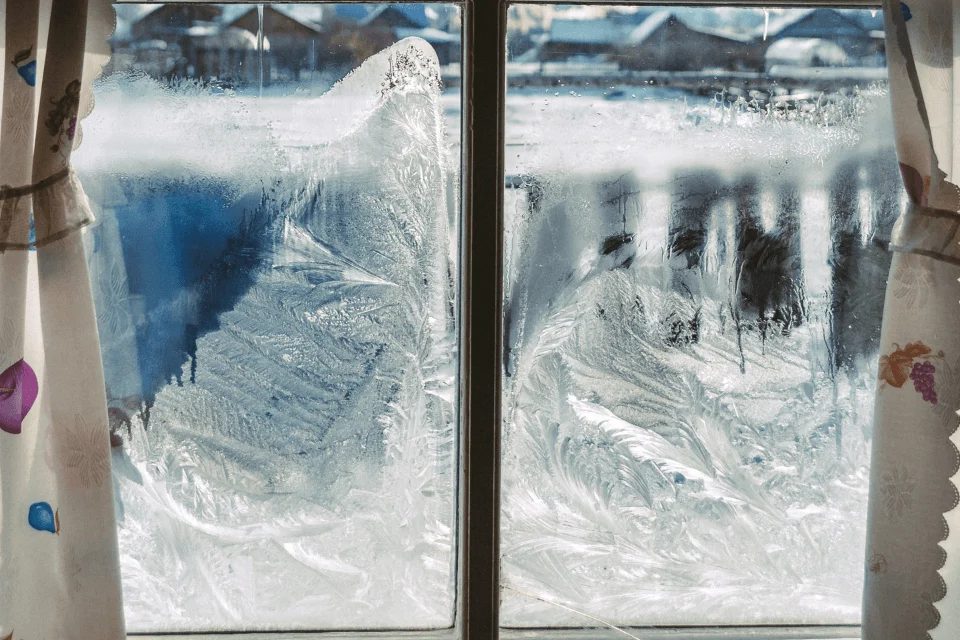
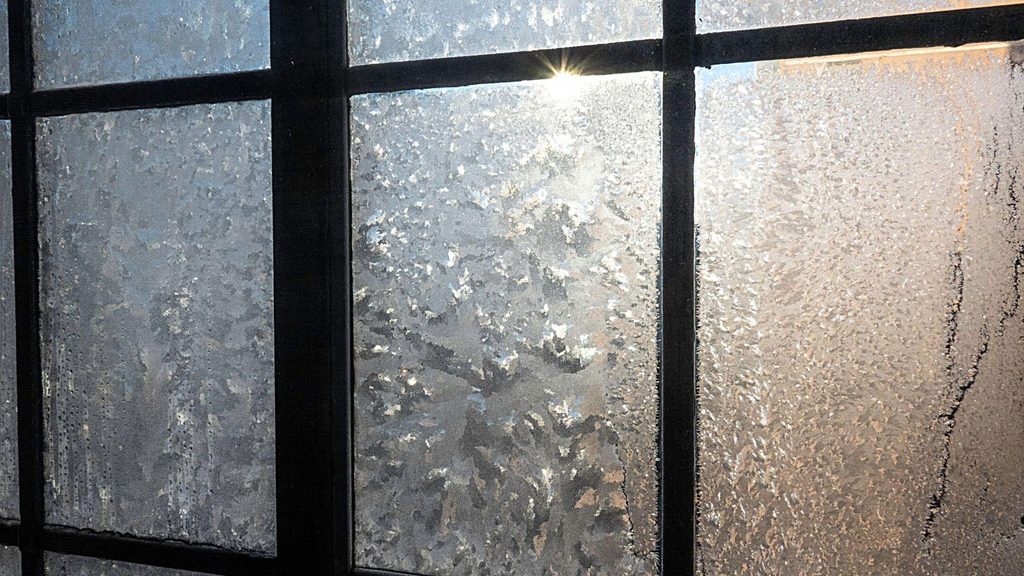
A deep overnight thermostat setback can cool glass and frames while bedrooms continue adding moisture. If surface temperature falls below the dew point and then below freezing, condensation can become frost before morning.
Alongside the specific checks in Ice on Windows After a Night-Time Heating Setback, review ice on windows and compare that guidance with measured conditions in this home.
Why the frost pattern matters
Treat the first cold morning as evidence collection, not a verdict. Frost does not begin with the same variable in every home. Outdoor temperature sets the thermal load; glazing, frame,
spacer, air leakage, coverings, room heat, and installation shape the interior surface temperature; occupants and ventilation set the moisture load. Diagnosis means keeping those groups separate long enough to test them.
Relative humidity can be healthy in a general sense and still be too high for a cold window on a particular night. Health Canada gives a broad 30-to-50-percent range but advises lowering humidity if condensation appears in cold weather. Natural Resources Canada’s examples show why the acceptable ceiling changes with outdoor temperature and window efficiency.
Evidence to collect:
- Clear glass at bedtime and frost before sunrise.
- Bedrooms cooler than the main floor.
- Closed doors reduce heat distribution.
- Frost improves when setback is reduced.
Within the diagnostic path for Ice on Windows After a Night-Time Heating Setback, use location and timing to distinguish ice on inside of house windows from between-pane moisture, uncontrolled air leakage, or a room-specific airflow problem.
Practical response:
- Record thermostat schedule and room temperature.
- Measure bedroom humidity before bed and at waking.
- Confirm supply and return paths are open.
- Test a smaller setback during similar weather.
- Keep coverings clear enough for safe airflow.
Illustrative scenario
Illustrative scenario: the thermostat drops 5 C at 10 p.m., two bedroom doors close, and frost appears by 6 a.m. A one-week comparison with a smaller setback and open return path can reveal whether operating conditions drive the event.
What not to assume
Do not respond by overheating the entire home without measurement. The useful test is whether a modest schedule or airflow change raises the window surface enough to prevent condensation while preserving comfort and efficiency.
When professional help makes sense
An HVAC professional can assess distribution and ventilation when bedrooms remain cold or humid. A window specialist should inspect one persistent outlier, especially if it leaks air or operates poorly. For a review centred on Ice on Windows After a Night-Time Heating Setback, bring photos and measurements plus the reference steps for frost forming inside windows; the visit can then begin with evidence rather than a generic replacement assumption.
Frequently asked questions
Does a night setback cause window failure?
No. It changes indoor surface temperature and can reveal a moisture or airflow limit; it does not by itself damage a sound window.
Should the thermostat never be lowered?
Not necessarily. Use a measured setback compatible with comfort, humidity, ventilation, and cold-weather performance.
Why are bedrooms affected first?
Closed doors, occupants breathing overnight, cooler setpoints, and covered windows can combine to raise local frost risk.
Suggested internal links
Impact of Window Design on Heat Loss and Gain
Choosing Window Frames for Heat Retention
Authoritative sources
Health Canada – Guide to addressing moisture and mould indoors
Health Canada – Ventilation and the indoor environment
Natural Resources Canada – Condensation